Medellin Paragliding: What to Wear, Weather, and Best Times
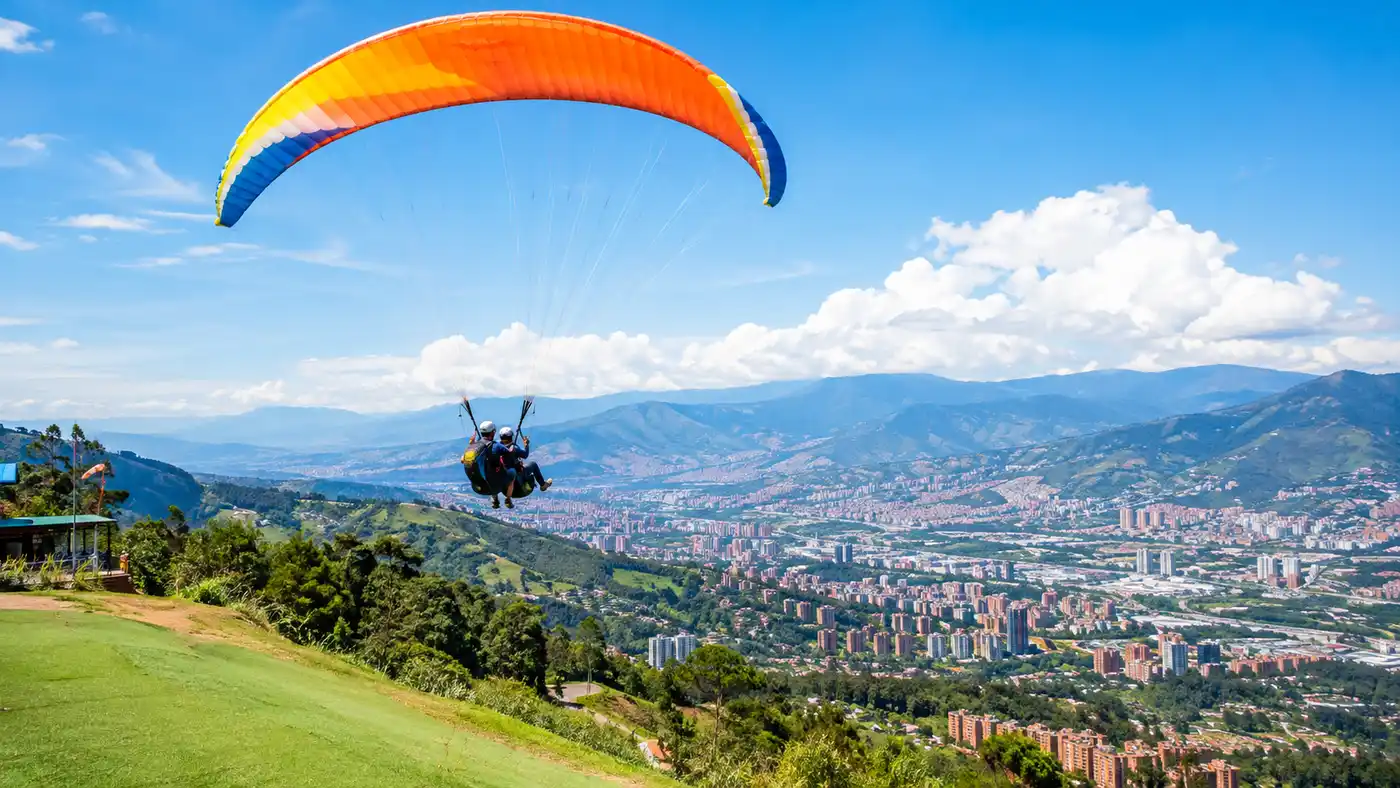
Standing in El Poblado at breakfast, the city feels tropical, humid, and warm enough for a linen shirt and sandals. An hour later you are standing on a sheared-off grass ridge in San Felix at 2,400 meters elevation, teeth chattering because the cloud line just dropped fifty feet and the wind is ripping across the valley at 18 knots. Figuring out paragliding medellin what to wear is usually an afterthought for travelers until they step out of a taxi into the damp highland air. You do not need professional mountaineering gear to soar over the Aburra Valley, but showing up in flip-flops and shorts will ruin what should be one of the best 20 minutes of your life in Colombia.
Weather in the Andes moves fast. The valley traps heat during the day, the peaks push cool air back down, and the conditions shift between bright sunshine and thick mist within a quarter of an hour. Knowing how to dress, when to book your launch slot, and how to read the clouds will save you from spending half your day sitting on a cold plastic bench waiting for rain to pass. Here is the breakdown on gear, local mountain microclimates, and flight timings based on dozens of runs off the mountain.
Book your paragliding medellin experience:
Paragliding Medellin: What to Wear from Head to Toe
Layering is the only strategy that actually works out here. Down in Medellin, it is usually 26 degrees Celsius, but the launch sites up in San Felix sit roughly 900 meters higher. Add in the wind chill while hanging beneath a wing moving 35 kilometers per hour, and it feels closer to 12 degrees up there. I always wear a breathable base layer, like a plain cotton crewneck or merino t-shirt, topped with a windbreaker or a light fleece jacket. You can pull the jacket off if you end up waiting around under direct sun, but you will want it zipped to your chin the second your feet leave the grass.
Pants are non-negotiable. Wear sturdy jeans, canvas trousers, or heavy athletic leggings. Do not wear shorts. Even on a warm day, the leg straps of the tandem passenger harness will dig directly into bare skin during takeoff and landing. If you slide on the grass during touchdown - which happens often when the wind drops abruptly - bare knees get chewed up fast. Sturdy fabric takes the friction instead of your skin.
Pro tip: Pick pants with deep zipper pockets. Once the harness is strapped around your thighs and waist, reaching into standard front pockets becomes impossible, and loose items will slide out the moment you lean back into the flight seat.
Your hands take the brunt of the cold air. Pilots usually wear leather gloves because they manage the brake lines, but passengers sit with their hands exposed, gripping the chest straps or holding a selfie stick. If you tend to get cold easily, throw a thin pair of knit gloves in your daypack. It sounds like overkill while packing in your hostel in Laureles, but you will thank yourself at 7,000 feet.
- Base layer: breathable t-shirt or long-sleeve athletic top that breathes well when you hike up the launch ramp.
- Outer layer: windbreaker, lightweight softshell, or a packable down jacket that cuts mountain drafts.
- Bottoms: long jeans, trail pants, or heavy running tights that protect legs against harness straps and abrasive turf.
- Accessories: neck gaiter or light scarf for cold mornings, plus thin gloves if you struggle with poor circulation.
Footwear, Pockets, and Securing Your Valuables
Footwear causes more canceled flights and twisted ankles than bad wind ever does. You need real shoes that lace up tight. Running sneakers, cross-trainers, or lightweight hiking boots work best. Skater slip-ons, sandals, Crocs, and anything with smooth dress soles are terrible ideas. Takeoff requires a full sprint down an uneven, inclined grass slope. You cannot hesitate, and you definitely cannot slide. If your shoes slip, the pilot loses forward momentum, the canopy deflates, and you both tumble into the turf.
Before clipping into the harness, empty your pockets completely. Hand your wallet, loose keys, and heavy phone to the ground crew or pack them inside a zippered inner jacket pocket. Gravity has a funny way of shaking loose change and passports out of open pockets while you swing through thermal updrafts. If something drops over the tree canopy below San Felix, it is gone forever into the ravines.
If you wear glasses or sunglasses, make sure they fit snugly against your temples. A cheap strap retainer costs around 4,000 COP at any corner shop in the city and prevents a gust of wind from stripping your expensive shades off mid-flight. Most tandem operators provide helmets with clear visors, but bringing your own UV sunglasses helps cut the glare off the western ridge when looking toward the sun.
Note: Bulky backpacks cannot be worn during flight. Tandem rigs have a small rear storage pouch for small items, but larger daypacks must be left on the launch deck with the ground staff.
San Felix Microclimates and Paragliding Medellin Weather
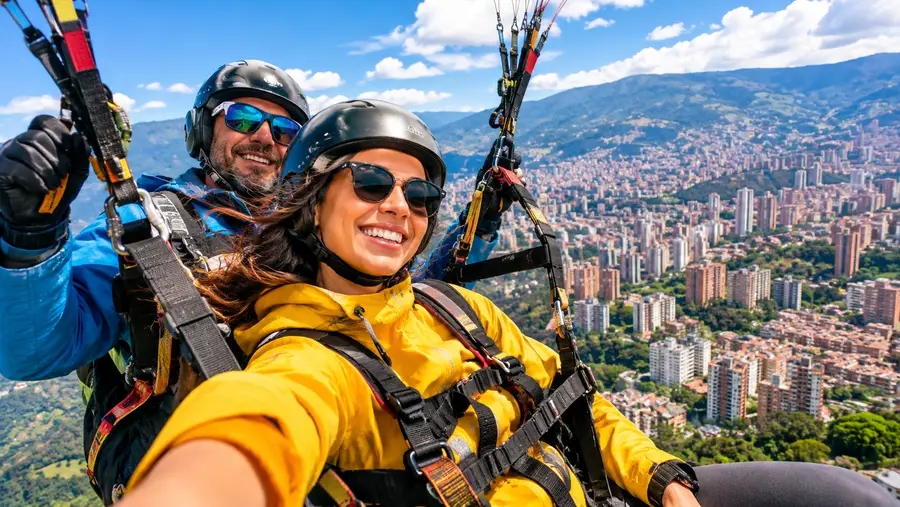
The geography surrounding Medellin produces complex wind currents. The city sits inside a deep bowl, walled off by steep green ridges. San Felix sits along the northwestern rim, creating a massive natural ramp where warm rising valley air collides with colder mountain winds blowing from the high plateau of Antioquia. This collision produces the thermal lift that lets paragliders stay aloft for hours, but it also creates rapid changes in the paragliding medellin weather that confuse travelers.
A bluebird morning can turn into dense fog within twenty minutes. Clouds form right at the lip of the takeoff zone when moisture rises from the valley floor and condenses against the cool ridge. When fog rolls in, flights stop immediately because pilots must maintain visual ground contact under aviation regulations. You can check our detailed guide on San Felix paragliding logistics to see how the altitude affects local transport and daily conditions. Rainy days do happen, but rain rarely lasts all day; it usually hits in sudden afternoon downpours that clear out by dusk.
| Time Window | Air Temperature | Wind Conditions | Flight Experience |
|---|---|---|---|
| 8:00 AM - 10:00 AM | 13°C - 16°C | Calm, light breeze | Smooth, gentle gliding; minimal turbulence; crisp mountain views |
| 10:00 AM - 1:00 PM | 17°C - 21°C | Active thermals, moderate | Highest altitude gains; buoyant lift; dynamic flight paths |
| 1:00 PM - 3:30 PM | 18°C - 22°C | Gusty, variable winds | Occasional bumps; frequent cloud cover; possible rain holds |
| 3:30 PM - 5:30 PM | 15°C - 18°C | Soft evening cycles | Mellow descent; golden hour lighting; risk of late showers |
Book your paragliding medellin experience:
The Best Time of Day to Fly: The 9:30 AM Sweet Spot
Timing your arrival makes the difference between stepping off the hill immediately or sitting on the grass for three hours staring into white mist. If you want the most predictable conditions, aim for the morning. Booking a flight around paragliding medellin 9 30 gives you the absolute best balance of clearing fog, low thermal turbulence, and steady incoming wind. The sun has had just enough time to warm the valley floor, creating the initial warm air pockets needed to keep the wing inflated and stable.
Arriving later in the afternoon increases your chances of getting stuck in weather holds. By 2:00 PM, cloud buildup over the western cordillera often triggers local storm cells. When assessing the best htime paragliding medellin pilots prefer, nearly all of them will tell you that the window between 9:00 AM and 11:30 AM offers the safest, clearest flying. Flights earlier than 8:30 AM can sometimes be delayed because low-hanging morning mist has not burned off yet.
Safety should guide your schedule above all else. For a detailed breakdown of safety procedures, insurance coverage, and equipment inspections on the hill, look through our review of how safe paragliding in Medellin is before you head out. Reliable operators never launch passengers into marginal wind, so if your pilot tells you to sit down and wait 40 minutes for the breeze to shift, listen to them without complaining.
- Early birds (8:30 AM - 10:00 AM): clearest skies, calmest air, great for nervous flyers who dislike bumps.
- Midday thrill seekers (11:00 AM - 1:00 PM): strongest thermals, longest flight times, chance to soar hundreds of meters above the launch pad.
- Late afternoon (after 3:00 PM): dramatic orange sunset lighting, but higher risk of wind cancellations and rain.
Capturing the Flight: Photos, GoPros, and Mounts
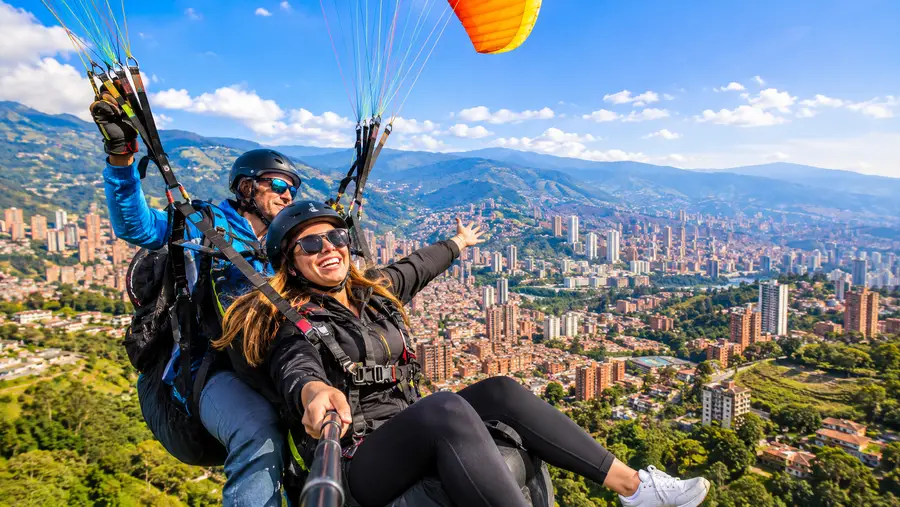
Almost everyone flying wants proof they floated over Medellin. Tandem companies capitalize on this, and paragliding medellin photos packages are pitched aggressively at every launch office. Typically, the pilot carries a wide-angle action camera mounted on an extendable aluminum pole. They hold it at arm's length, shooting back toward you and the wing with the green hills and sprawling city laid out below. The cost for the memory card or phone transfer runs around 40,000 to 60,000 COP, which is fairly reasonable for what you get.
If you prefer to bring your own GoPro or action camera, you must have it tethered. Pilots will not let you fly with a loose handheld phone or an unstrapped camera. If you fumble a phone while reaching for a video angle, it will drop into the canopy below at terminal velocity. Buy a secure wrist strap or chest harness beforehand. Honestly, holding a camera stick the entire time can distract you from the actual feeling of free flight. Sometimes it is better to take a quick thirty-second video, stash the camera, and spend the remaining fifteen minutes just watching the shadows shift across the valley floor.
Drones are heavily restricted near San Felix. The launch zones fall directly under local visual flight paths, and having consumer drones hovering near active paragliding canopies is exceptionally dangerous. Leave your quadcopter in your hotel room unless you have obtained written permission from the launch club and local airspace authorities.
Frequently Asked Questions about paragliding medellin what to wear
Can I wear shorts if the weather forecast in Medellin is hot?
You should not wear shorts. Even if Medellin feels hot, San Felix is much colder, and the wind up in the air drops the temperature significantly. Long pants also protect your legs from harness chafe during takeoff and grass burns during landing.
What happens if it starts raining while I am waiting to fly?
Paragliding pauses immediately in the rain because wet glider fabric becomes heavy and dangerous to steer. Pilots wait out brief showers under the sheltered launch huts. If the rain settles in for the day, reputable companies will reschedule your slot or refund your flight fee.
Are running sneakers acceptable or do I need hiking boots?
Standard running sneakers or athletic trainers with good rubber tread are completely fine. You just need closed-toe shoes that lace tightly so they do not fall off your feet mid-flight and give you solid traction on wet grass.
Quick Reference
- Dress in layers with a windbreaker
- Wear sturdy lace-up running shoes
- Book morning flights around 9:30 AM
- Secure all phones and glasses with straps
- Expect temperatures around 14°C at launch
Book your paragliding medellin experience:
Before You Go
Paragliding over San Felix gives you a perspective on Medellin that you simply cannot get from any rooftop bar in El Poblado or cable car ride in Santo Domingo. The scale of the mountains here is immense, and floating silently along the ridge lines with hawks circling nearby puts the whole valley into perspective. Take five minutes the night before to dig out proper shoes, pack a fleece jacket, and empty your pockets of loose clutter. When you are strapped in and your pilot yells at you to run off the side of the green hill, you will be glad you left the flip-flops back at your hostel.
Read more about paragliding medellin.